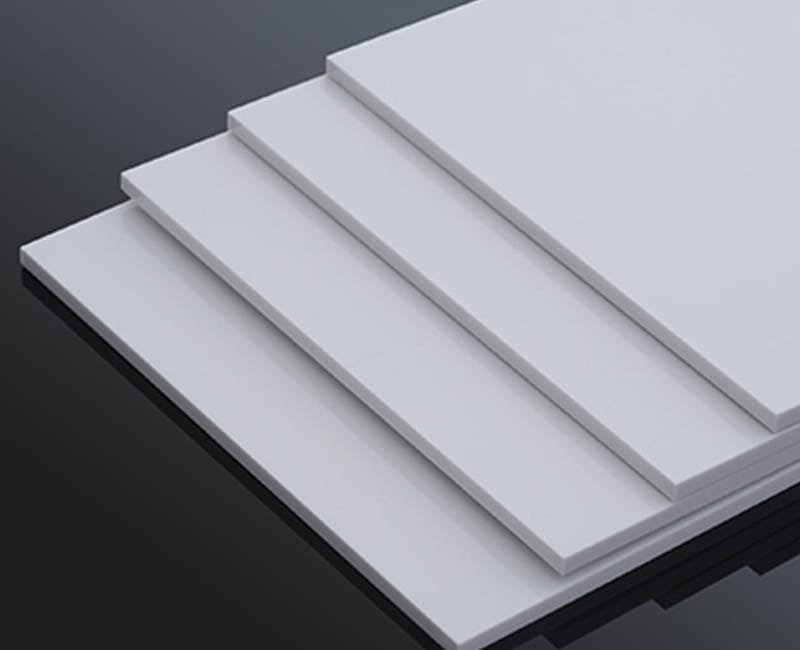
If you have walked past a printed display at a mall, a school project at a science fair or a shop sign that looks like smooth plastic but weighs almost nothing, you have probably seen PVC foam board. Often called Sunboard in India, it is one of the most versatile materials in advertising, interior work and craft.
It is light, easy to cut, takes print beautifully and costs far less than metal or acrylic. This guide explains what PVC foam boards and Sunboard sheets are, where they work best, how to choose the right thickness and how to work with them.
What Are PVC Foam Boards?
PVC foam board is a closed-cell, lightweight sheet made from polyvinyl chloride. During manufacture, a foaming agent creates a fine, uniform cell structure inside the sheet, while a smooth skin forms on each surface. The result is a board that is rigid, flat and far lighter than solid PVC.
You will see different names depending on the region and the brand. PVC foam sheet, Sintra, Forex, Sunboard, Celuka and expanded PVC all describe similar products. When people search for PVC foam boards or Sunboard sheets, they usually mean the same family of material.
Key Properties
- Lightweight: Easy to transport, hang and install, even in large sizes.
- Smooth surface: Accepts direct printing, vinyl application, paint and lamination.
- Moisture resistant: Does not absorb water, swell or rot like wood and MDF.
- Termite-proof: Safe for use in humid or insect-prone environments.
- Easy to fabricate: Cuts with a utility knife, saw, router or laser-free tools.
- Chemical and weather resistant: Holds up well indoors, and when properly specified, in sheltered outdoor use.
- Flame retardant: Rigid PVC is self-extinguishing, though it should still be kept away from open flames.
- Cost effective: Offers good value compared with acrylic, aluminium composite and wood.
Common Applications
Advertising and signage
The advertising industry uses Sunboard more than any other. Flat-printed boards, cut-out lettering, shop name boards, window signs, point-of-sale displays and exhibition graphics all rely on it. Because it is light, it is easy to hang from ceilings and walls, and it can be cut into any shape.
Digital and UV printing
The smooth surface suits direct UV printing, screen printing and mounting of printed vinyl. Printed boards give sharp colours and a clean finish, so they are popular for menus, directional signs, event boards and retail promotions.
Interiors and furniture
Designers use thicker PVC foam sheets for cabinets, kitchen and bathroom carcasses, wardrobes, partitions, false ceilings and wall panelling. The board’s moisture and termite resistance make it a smart substitute for plywood in damp areas.
Exhibitions and display models
Trade show stands, architectural models, photo backdrops and display units are often made from foam board because it is quick to build, easy to transport and simple to replace.
Education and crafts
Schools, colleges and hobbyists use it for projects, models and teaching aids. It is safe to cut, forgiving to work with and presents well.
Choosing the Right Thickness
PVC foam board is made in a range of thicknesses, and selecting the right one prevents warping and saves money.
- 1 to 2 mm: Flexible and light. Good for lightweight indoor graphics, packaging mock-ups and craft.
- 3 mm: The most popular thickness for printed signs, standees, displays and general advertising.
- 5 mm: A stronger choice for larger signs and boards that need extra rigidity.
- 8 to 10 mm: Used for heavier signs, partitions and display structures.
- 12 mm and above: Furniture, cabinets, shelving and structural panels.
Bigger boards need more thickness to resist sagging. As a rough guide, if a sign is larger than about one metre in any direction and hangs without a frame, step up to 5 mm or more.
Density and Quality
Foam boards are sold in different densities, generally expressed in grams per cubic centimetre. Lower-density boards are lighter and cheaper but are softer and more likely to dent. Higher-density boards are firmer and hold screws better. For signs and displays, a medium density is usually enough. For furniture, partitions and heavy-use items, choose a higher density.
When assessing quality, check for even thickness, a smooth and consistent surface, a uniform colour and a clean cut edge with fine, even cells. Poor-quality boards often show an uneven surface, chalky edges and uneven foaming.
How to Cut and Work with Sunboard
- Marking. Use a pencil or marker and a straight edge. Draw lightly to avoid scratching the surface.
- Cutting thin sheets. A sharp utility knife works well. Score several times and snap along the line.
- Cutting thicker sheets. Use a fine-tooth saw, jigsaw or router with a plastic bit. A CNC router gives accurate shapes for lettering and logos.
- Smoothing edges. Sand lightly with fine sandpaper. You can also use a scraper or a deburring tool.
- Joining. Use PVC cement, solvent glue, double-sided tape or screws with washers. Pre-drill holes to avoid splitting.
- Printing and coating. Wipe the surface clean before printing, painting or applying vinyl. Use paints suitable for PVC.
Using PVC Foam Boards Outdoors
Standard PVC foam board can be used outdoors in sheltered locations, but direct sunlight and heat can cause some warping and fading over time. For outdoor use, choose UV-resistant board, add a protective laminate or varnish, and mount the board in a frame or on a rigid backing. Allow for expansion by leaving small gaps and avoiding over-tight fixings. Avoid mounting dark-coloured boards in strong direct sun.
Care and Storage
- Store sheets flat on a clean, level surface
- Keep them out of direct sunlight and away from heat sources
- Avoid stacking heavy loads on top
- Leave the protective film on until installation
- Clean with a soft damp cloth and mild detergent
- Avoid strong solvents, which can damage the surface
PVC Foam Board vs Other Materials
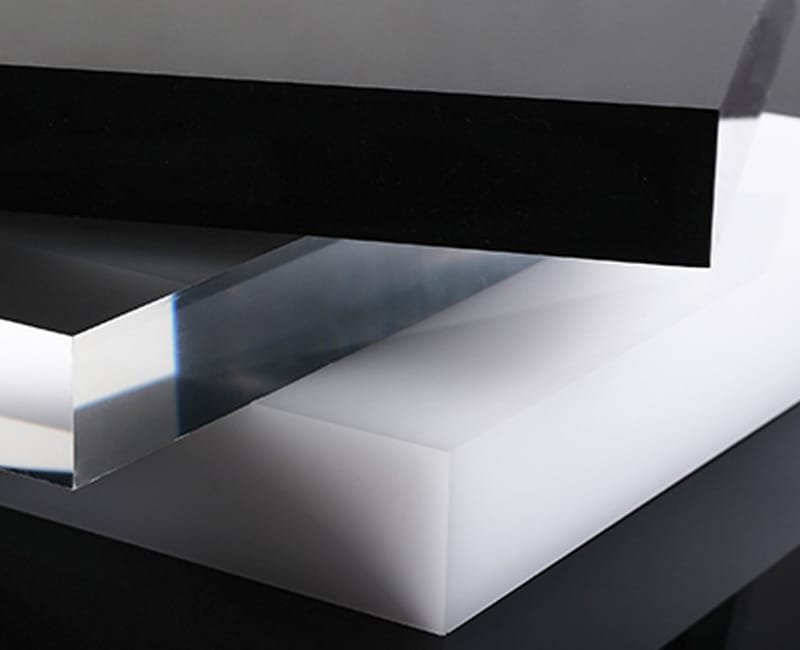
- Versus acrylic: Foam board is lighter and cheaper but not transparent or as glossy. It is better for opaque printed signs, while acrylic suits clear, polished displays.
- Versus plywood and MDF: Foam board resists water and termites, and is much lighter, but does not match the load-bearing strength of timber.
- Versus ACP: Aluminium composite panels are stronger and more suitable for long-term outdoor fascias. Foam board is cheaper and easier to cut.
- Versus PP corrugated: Foam board is rigid and prints with a more premium finish, while PP corrugated is lighter and cheaper for short-term use.
Buying Tips
Before you order, confirm the thickness, size, density and colour you need. White is the most common, though colours are available. Request a sample if you are doing a large print run, and check how the board behaves with your printing process. Ask your supplier about bulk pricing, because large orders often reduce the per-sheet cost significantly.
Get Your Sheets from Maestro Glas
Maestro Glas supplies PVC foam boards and Sunboard sheets alongside acrylic, PVC, PP corrugated sheets and display products. Whether you are a print shop, interior contractor, exhibition builder or hobbyist, our team can help you choose the right sheet for the job.
Contact Maestro Glas today to ask about PVC foam boards and Sunboard sheets and get a quote.